Why Are My Calathea Leaves Curling? (And What to Do)
Calathea leaves curling? Learn the 6 most common causes including low humidity, watering problems, and temperature stress, plus how to fix each one.
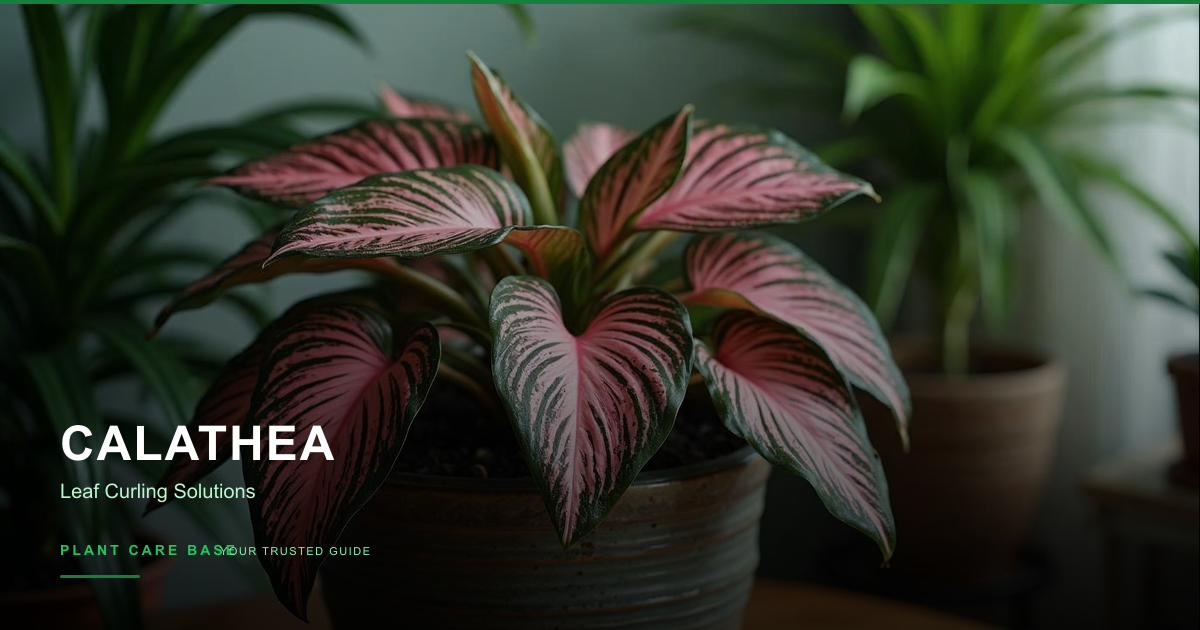
I’ll be honest: calatheas almost broke me as a plant parent. My first ornata started curling within two weeks of bringing it home. I tried everything I could think of: more water, less water, moving it around the apartment. Nothing worked. It wasn’t until I bought a cheap hygrometer and realized my apartment was at 28% humidity that the picture became clear. These plants come from tropical rainforests. My Brooklyn apartment in January was basically a desert to this plant.
Once I got a small humidifier running nearby, the leaves uncurled within a week. That experience taught me that calatheas aren’t actually “difficult.” They just need specific conditions that most homes don’t naturally provide. If your calathea’s leaves are curling right now, I’ve been exactly where you are, and I can tell you it’s almost always fixable.
Understanding Why Calatheas Curl
Before we get into the causes, it helps to understand what’s actually happening. When a calathea curls its leaves inward, it’s a defense mechanism. The plant is trying to reduce the surface area exposed to air, which slows down moisture loss through the leaves. It’s essentially the plant saying: “I’m losing water faster than I can replace it.”
This can happen because the air is too dry (the most common reason), the roots aren’t getting enough water, or the roots are too damaged to deliver water to the leaves. Every cause of calathea curling connects back to this water balance equation.
One thing to note: calatheas naturally move their leaves throughout the day. They fold slightly upward at night and open flat during the day. That’s called nyctinasty, and it’s completely normal. The curling we’re talking about here is inward curling that doesn’t resolve on its own, usually accompanied by crispy edges or browning.
1. Low Humidity (The #1 Cause)
I put this first because it’s the culprit in about half the cases I’ve seen. Calatheas are native to tropical rainforests where humidity levels hover around 60-80%. In most homes, especially in winter with heating running, humidity sits around 25-40%. That gap is massive for a plant that evolved in near-constant moisture.
Signs
- Leaves curl inward from the edges, like they’re trying to roll into tubes
- Leaf tips and edges turning brown and crispy
- Curling gets noticeably worse in winter (when heating systems dry the air)
- Multiple leaves affected, not just one or two
The Fix
Get a humidifier. I know it sounds like an investment, but it’s genuinely the single best thing you can do for calatheas. You don’t need anything fancy; a $30 cool-mist humidifier near the plant does the job. Aim for 50-60% humidity in the immediate area.
Pebble tray. Fill a shallow tray with pebbles and add water to just below the top of the pebbles. Set the pot on top (not touching the water). As the water evaporates, it creates a humid microclimate right around the plant. It’s not as effective as a humidifier, but it helps.
Group your tropical plants together. Plants release moisture through transpiration, so clustering your calathea with other tropicals like a peace lily, a monstera, and ferns raises the humidity for all of them. My calathea corner has four plants within two feet of each other, and they all benefit.
Skip the misting. I know everyone on the internet says “mist your calathea,” but misting raises humidity for about five minutes. That’s it. Worse, water sitting on calathea leaves can promote fungal problems. Save yourself the effort and get a real humidity solution.
2. Underwatering
Calatheas like their soil consistently moist, not soaking wet and not dried out. They’re not like pothos or snake plants that prefer to dry between waterings. When calathea soil dries out too much, the plant curls its leaves to conserve whatever moisture it has left.
Signs
- Soil is dry more than an inch deep
- Leaves feel lighter and slightly papery when you touch them
- Curling improves noticeably within a day of watering
- The soil has pulled away from the edges of the pot
The Fix
- Water when the top 1 inch of soil feels dry, and don’t wait until it’s bone dry like you would for a succulent
- Use room-temperature water (cold water shocks the roots and can cause even more curling)
- Water thoroughly until it drains from the bottom, then empty the saucer
- Bottom watering works great for calatheas that have gotten too dry. Just set the pot in a tray of water for 20 minutes
The tricky balance with calatheas is keeping the soil evenly moist without making it soggy. If you’re struggling with this, a moisture meter can genuinely help, or just check the soil every 2-3 days with your finger.
3. Too Much Direct Sunlight
Calatheas evolved on the rainforest floor, beneath a canopy of taller trees. They never see direct sunlight in nature. When you put one in a sunny windowsill, the intense light scorches their delicate leaves and triggers curling as the plant tries to protect itself.
Signs
- Curling plus faded or bleached leaf patterns (those beautiful markings look washed out)
- Brown, crispy patches on the most sun-exposed leaves
- Colors look muted instead of vibrant
- Curling is worse on the side facing the window
The Fix
- Move to a spot with bright, indirect light, a few feet from a window, or behind a sheer curtain
- North or east-facing windows are ideal for calatheas
- They can tolerate lower light, but the patterns won’t be as vivid and growth will slow
- If the damage is already done, those burned spots won’t heal, but new growth will come in looking normal
4. Temperature Stress
Calatheas are tropical. They want warmth, and they want it consistent. A temperature swing of 15-20 degrees between day and night, or a cold draft from a window, is enough to trigger curling.
Signs
- Sudden curling after a temperature change (turned on the AC, opened a window, moved the plant)
- Curling worse at night or in winter mornings
- Plant is positioned near a window, exterior door, or HVAC vent
The Fix
- Keep temperatures between 65-80°F (18-27°C), no exceptions
- Move away from drafty windows, especially single-pane ones in winter
- Keep away from air conditioning vents and heating registers
- Don’t place calatheas in rooms that get very cold at night
- Consistency matters more than the exact number. A steady 68°F is better than swinging between 55°F and 80°F
5. Water Quality Issues
This is the sneaky one that took me months to figure out. Calatheas are notoriously sensitive to fluoride, chlorine, and dissolved minerals in tap water. These chemicals build up in the soil over time, damaging the roots and causing slow, persistent curling and browning that doesn’t respond to humidity or watering adjustments.
Signs
- Gradual onset of curling and brown tips that gets worse over weeks
- White crusty deposits on the soil surface (mineral buildup)
- The problem persists despite correct watering and good humidity
- Brown tips keep appearing on new growth too (see our brown leaf tips guide for the full diagnostic)
The Fix
- Switch to filtered, distilled, or rainwater. This alone fixes the problem for many calathea owners
- If you must use tap water, let it sit out overnight in an open container so the chlorine can evaporate (note: this doesn’t remove fluoride)
- Flush the soil every 2-3 months by running water through it for several minutes to wash out accumulated minerals
- If mineral buildup is severe, repot in fresh soil
6. Root Problems
If you’ve checked everything above and the curling won’t stop, the issue might be underground. Root rot from overwatering or a severely root-bound plant can prevent proper water uptake, and if roots can’t deliver water to the leaves, the leaves curl no matter how perfect your humidity and watering are.
Signs
- Curling persists despite good humidity, correct watering, and filtered water
- Soil stays wet for days after watering (roots aren’t drinking)
- Mushy, soft stems near the base
- A sour smell from the soil
The Fix
- Gently remove the plant from its pot
- Inspect the roots: healthy calathea roots are white or light tan and firm. Rotting roots are brown, mushy, and may smell
- Trim away all damaged roots with sterilized scissors
- Repot in fresh, well-draining soil (standard potting mix with perlite and some orchid bark)
- Use a pot with drainage holes, always
- Wait a few days before watering, then resume careful watering with filtered water
Quick Diagnosis Checklist
| Symptom | Likely Cause | First Step |
|---|---|---|
| Curling + crispy edges + dry air | Low humidity | Get a humidifier, aim for 50-60% |
| Curling + dry soil | Underwatering | Water when top inch is dry |
| Curling + bleached/faded patterns | Too much direct sun | Move to bright indirect light |
| Curling + persistent brown tips | Water quality | Switch to filtered or distilled water |
| Curling after temperature change | Temperature stress | Move to warm, stable location |
| Curling + wet soil + mushy stems | Root rot | Check roots, trim damage, repot |
How to Keep Your Calathea Happy Long-Term
Once you’ve solved the immediate curling, these habits will keep your calathea looking its best:
- Humidity is non-negotiable. Keep it above 50%. A humidifier is the easiest way.
- Water with filtered or distilled water. Your calathea will thank you with clean, crispy-tip-free growth.
- Check the soil every 2-3 days. Calatheas want consistently moist (not wet) soil.
- Find the right light. Bright indirect light brings out the best patterns without burning.
- Rotate the pot monthly. This ensures even growth and prevents lopsided leaning.
- Feed lightly. Once a month during spring and summer with diluted liquid fertilizer. These are not heavy feeders.
The Bottom Line
Calathea leaf curling comes down to one thing: the plant is losing moisture faster than it can replace it. Whether that’s because the air is too dry, the roots can’t absorb water, or the water quality is damaging the roots, the solution is always about restoring that balance.
Start with humidity. Check your watering. Switch to filtered water. Most calatheas bounce back within a week or two once you dial in the right conditions.
These plants have a reputation for being fussy, and honestly, they earn it a little bit. But once you understand what they actually need (and it’s really just humidity, consistent moisture, and clean water), they become one of the most visually stunning plants you can grow indoors. That ornata that almost broke me? It’s now one of my favorite plants, and it hasn’t curled a leaf in over a year.
If you’re working through other plant issues, our guides on overwatering vs underwatering and root rot cover the fundamentals that apply to every houseplant in your collection.
Frequently Asked Questions
Why are my calathea leaves curling at night?
Should I mist my calathea to stop leaf curling?
Can curled calathea leaves uncurl?
What water should I use for calatheas?
Don't miss our guides
Weekly plant care newsletter.