Snake Plant Care: The Houseplant That Thrives on Neglect
Snake plants are nearly impossible to kill. Here's the complete care guide covering light, water, soil, propagation, and the few things that can go wrong.
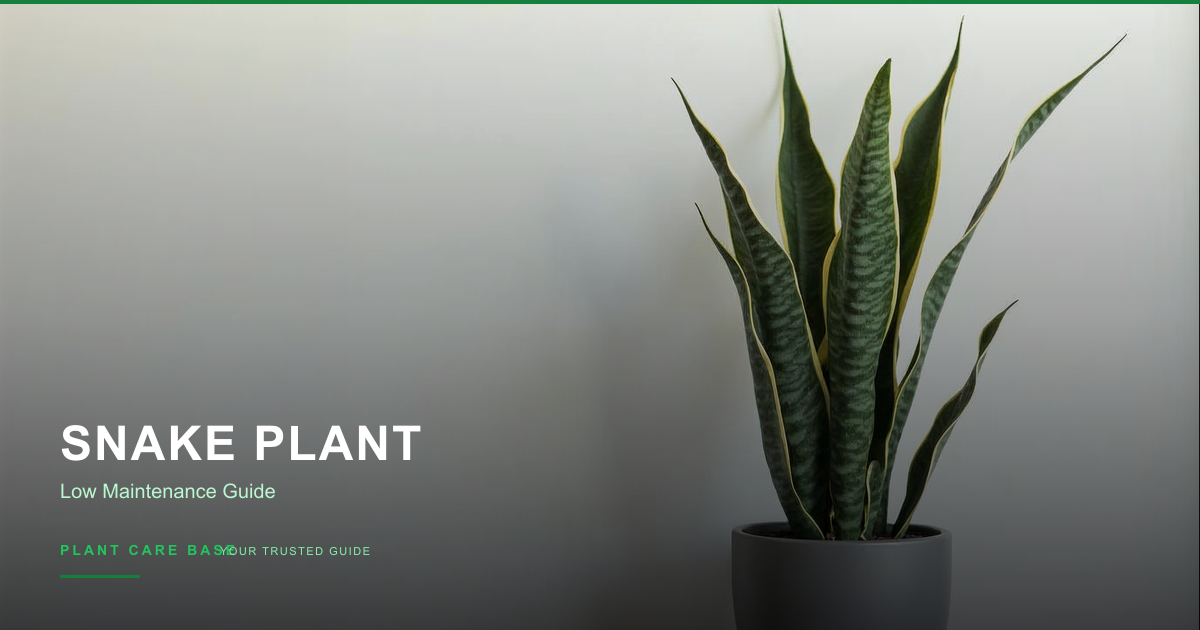
If you’ve ever walked into a friend’s apartment and noticed that one plant standing tall in the corner, perfectly healthy despite clearly not getting much attention, there’s a good chance it was a snake plant. These things are built to survive. I once left mine alone for almost a month during a vacation, and it looked exactly the same when I came back. No drama, no crispy leaves, no guilt trip.
Snake plants (still widely called Sansevieria, though they’ve been reclassified under Dracaena) are one of the best starter plants you can get. If you’ve browsed our best houseplants for beginners list, you already know they’re right near the top. Let me walk you through everything it takes to keep them happy, which honestly isn’t much.
Why Snake Plants Are Perfect for Beginners
The short answer: they survive almost anything. Low light? Fine. Forgot to water for three weeks? They don’t care. Bone-dry air from your heating system in winter? They barely notice.
Snake plants are succulents, which means they store water in their thick, upright leaves. That built-in reservoir makes them incredibly drought-tolerant and far more likely to die from too much water than too little. If you tend to forget about your plants, a snake plant is actually your ideal match.
You might have heard about NASA’s famous Clean Air Study from the late 1980s. Snake plants were found to filter out formaldehyde, xylene, toluene, and nitrogen oxides from indoor air. You’d need a whole jungle to make a measurable difference in a real room, but it’s still a nice bonus.
The variety hooks people too. Snake plants aren’t just the tall, yellow-edged ones at every garden center. There are compact rosettes, silver-toned types, round cylindrical ones, and massive single-leaf forms. Once you start collecting, it’s hard to stop.
Light Requirements
This is one of the most flexible plants you’ll find when it comes to light. Snake plants tolerate everything from a dim hallway to a bright living room. I’ve kept them in both situations and they grew in each, just at different speeds.
Bright, indirect light is where snake plants grow fastest and look their best. Near a window with filtered light is perfect. You’ll see more new leaves and stronger color contrast in the variegated types.
Low light works too. Growth will be slower, and the colors may not be as vivid, but the plant will stay healthy. This is what makes snake plants so popular for offices, bathrooms, and rooms without great windows.
The one thing to watch out for is intense, direct afternoon sun. A couple hours of gentle morning sun from an east-facing window is totally fine. But hot afternoon rays through a south or west window can scorch the leaves, leaving bleached or brown patches. If you notice that happening, just scoot the plant back a foot or two from the window.
Watering
Here’s the golden rule with snake plants: less is more. If you’re ever unsure whether to water, just wait. Overwatering is the number one way people kill these plants, and I say that from experience.
During the growing season (spring and summer), watering every 2-3 weeks is usually about right. In winter, when growth slows down, once a month is plenty. Some people go even longer, and the plant doesn’t seem to mind.
My watering routine:
- Stick my finger about 2 inches into the soil.
- If it’s completely dry, I water thoroughly until it drains from the bottom.
- If there’s any moisture at all, I leave it alone and check again in a few days.
- I always empty the saucer underneath so the pot never sits in standing water.
The leaves themselves can tell you what’s going on. Wrinkled, slightly shriveled leaves mean the plant is thirsty, though this is pretty rare. Mushy, soft leaves at the base mean you’ve been watering too much.
If you’re trying to get a handle on when to water and when to hold off, our overwatering vs underwatering guide breaks down the signs for all houseplants. It’s a helpful reference to keep handy.
Soil and Potting
Drainage is everything for snake plants. Their roots absolutely cannot sit in wet soil for long periods, or you’ll end up with rot. The soil mix and pot choice both matter here.
Soil: A cactus and succulent mix is the easiest option. It’s already formulated for fast drainage. If you only have regular potting soil on hand, mix in a generous amount of perlite (about 30-40%) to lighten it up and help water flow through quickly.
Pots: Terracotta is my first pick. The porous clay wicks away extra moisture, adding protection against overwatering. Plastic works too, but you’ll need to water less often since the soil stays wet longer.
- Always use a pot with drainage holes.
- Snake plants have shallow roots, so a wide, low container works great and keeps tall varieties from tipping over.
- They don’t mind being root-bound. Repot every 2-3 years, or when roots push through the drainage holes.
- Go up only one pot size when repotting. Too large means too much moisture sitting around unused roots.
Popular Varieties
Snake plants come in way more shapes and sizes than most people realize. Here are some of the most popular ones you’ll find.
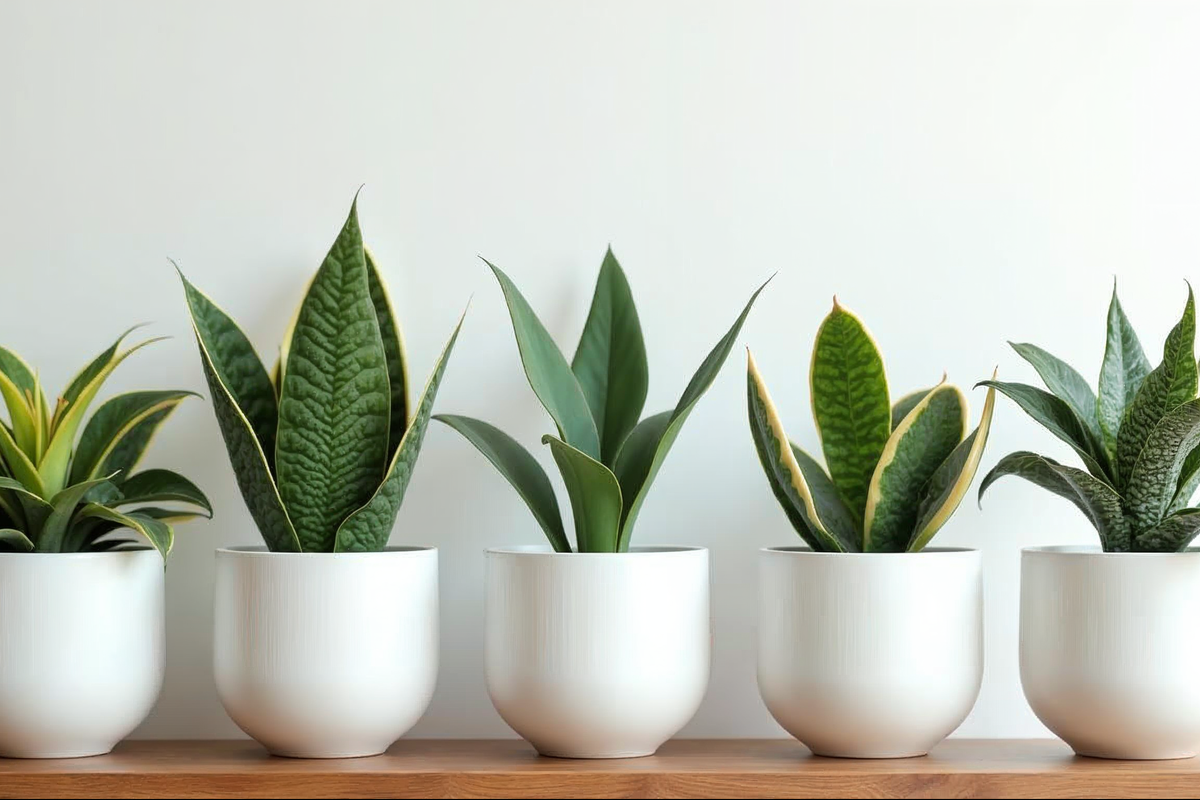
Laurentii is the classic. Tall, sword-shaped leaves with dark green horizontal bands and bright yellow edges. This is the one you’ll see in most stores, and it’s a great starting point.
Moonshine has broad, pale silvery-green leaves that almost seem to glow. It’s a more subtle, modern look. Needs a bit more light than darker varieties to keep that silver tone.
Cylindrica breaks the mold with round, tubular leaves that grow in a fan shape. You’ll sometimes see them braided in stores. They’re a conversation starter and just as easy to care for.
Whale Fin (Sansevieria masoniana) produces one or two enormous, paddle-shaped leaves. A single leaf can reach two feet tall and nearly a foot wide. It’s a real statement piece.
Bird’s Nest (Hahnii) grows as a compact, low rosette instead of tall upright leaves. It tops out around 6-8 inches, perfect for desks and small spaces.
All of these need the same basic care. The main differences are growth rate and how much light they want for the best coloring.
Propagation
Snake plants are easy to propagate, and there are two main methods. One is faster, the other is more fun to watch.
Division (the fast method):
When your snake plant produces pups (baby plants that sprout next to the mother plant), you can separate them during repotting.
- Remove the entire plant from its pot.
- Gently separate the pup from the main root system. Use a clean knife if they’re tightly connected.
- Let the cut dry for a day so it calluses over.
- Plant the pup in its own pot with fresh cactus mix.
- Water lightly and wait. It should establish within a few weeks.
Leaf cuttings (the slow but satisfying method):
- Cut a healthy leaf into 3-4 inch sections. Mark which end is “down” (the end that was closer to the soil), because the cutting won’t root if you plant it upside down.
- Let the cuttings dry for 1-2 days until the cut edges callus.
- Place them in water (submerging just the bottom inch) or stick them directly into moist cactus mix.
- Wait. This part takes patience. Roots usually appear in 2-4 weeks, but new leaf growth can take 2-3 months.
One thing to know about leaf cuttings: variegation is usually lost. If you propagate a Laurentii leaf cutting, the new plant will likely come back as a plain green snake plant without the yellow edges. The only way to keep the variegation is to propagate by division. This catches a lot of people off guard, so now you know.
Common Problems
Snake plants are tough, but they’re not completely bulletproof. Here are the issues that come up most often.
Mushy, Soft Leaves at the Base
This is almost always overwatering. The roots rot in wet soil, and that decay works its way up into the leaves. If you catch it early, unpot the plant, cut away any brown or mushy roots, let the base dry for a day, and repot in fresh soil. Our root rot guide walks through the full rescue process.
If only one or two leaves are mushy, remove them at the soil line and cut back on watering.
Brown, Crispy Tips
Two common causes. First, sunburn from too much direct light. Move the plant to a spot with less direct exposure.
Second, cold damage. Snake plants don’t like temperatures below 50°F (10°C). If your plant is near a drafty window or exterior door in winter, the tips can brown out. Move it somewhere warmer and new growth should come in clean.
Drooping or Leaning Leaves
Healthy snake plant leaves stand up straight. If yours are flopping over, overwatering is the most likely culprit. Weakened or rotting roots can’t support the leaf weight. Check the root system and treat for root rot if needed.
Leaves leaning toward a light source is normal. Just rotate the pot a quarter turn every few weeks.
Slow Growth
This isn’t really a problem. Snake plants are just slow growers, especially in lower light. You might not see new growth for months during winter, and that’s normal. Don’t try to fix it by watering or fertilizing more. Patience is the only answer here.
Wrinkled Leaves
This is the opposite of mushy leaves. Wrinkled, slightly puckered leaves mean the plant is thirsty. It’s rare with snake plants, because most people err on the side of overwatering, but it does happen if you’ve gone a very long time without watering. A good, thorough soak should plump the leaves back up within a day or two.
Quick Care Cheat Sheet
| Need | Recommendation |
|---|---|
| Light | Low to bright indirect (avoid harsh direct sun) |
| Water | Every 2-3 weeks in summer, monthly in winter |
| Soil | Cactus/succulent mix or potting soil with extra perlite |
| Temperature | 60-85°F (16-29°C) |
| Humidity | Normal household levels, not picky |
| Fertilizer | Once or twice during spring/summer, half-strength |
| Repotting | Every 2-3 years or when root-bound |
| Propagation | Division (keeps variegation) or leaf cuttings |
| Toxicity | Mildly toxic to pets if ingested |
Final Thoughts
Snake plants are the kind of houseplant that makes you feel like a good plant parent without asking much in return. Water them sparingly, give them decent light (or don’t, they’ll manage), and they’ll quietly grow in the corner for years. They’re one of the few plants where the biggest mistake you can make is caring too much.
If you’re building up a collection of easy-care houseplants, pair your snake plant with a pothos for some trailing greenery and a spider plant for those fun hanging babies. The three of them together cover just about every spot in your home, from bright windows to dim corners, and none of them will punish you for going on vacation.
Happy growing.
Frequently Asked Questions
How often should I water a snake plant?
Can snake plants survive in low light?
Are snake plants toxic to cats and dogs?
Why is my snake plant turning mushy at the base?
Don't miss our guides
Weekly plant care newsletter.