Why Is My Monstera Turning Yellow? 7 Causes and How to Fix Them
Monstera leaves turning yellow? Here are the 7 most common causes and exactly what to do about each one, from overwatering to nutrient deficiency.
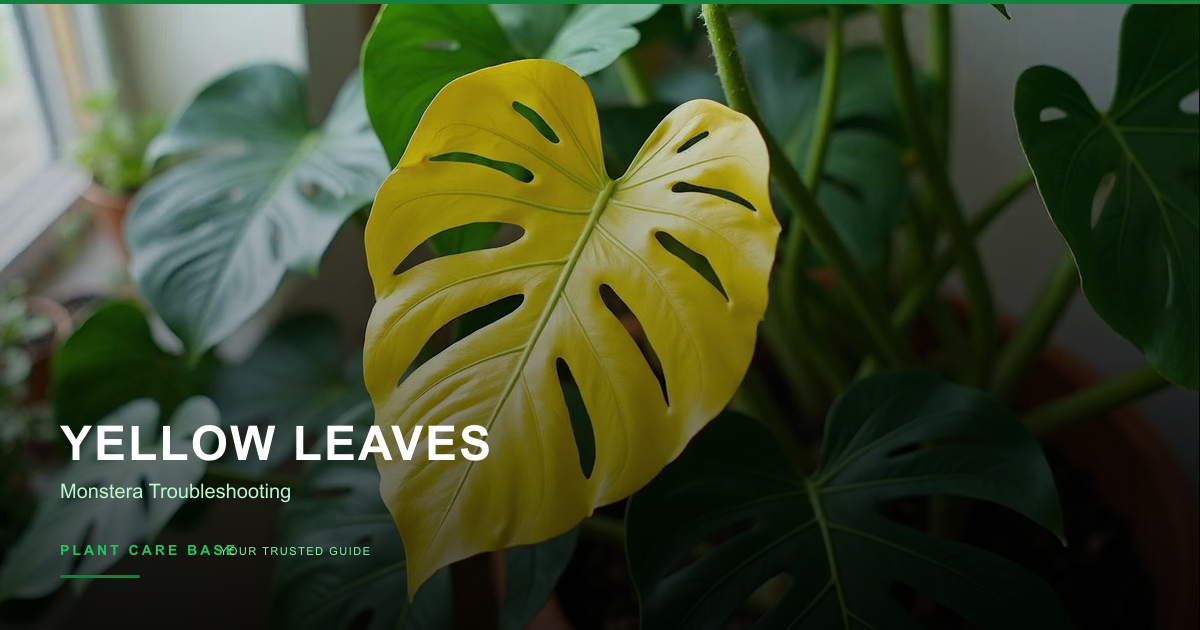
You walk over to your Monstera, coffee in hand, and there it is: a leaf turning yellow. Cue the panic spiral. Is it dying? Did you do something wrong? Should you repot it immediately at 7 AM on a Tuesday?
Take a breath. Yellow leaves on a Monstera are incredibly common, and most of the time the fix is straightforward once you figure out what’s going on. I’ve dealt with this on my own Monsteras more than once, and the plant always bounced back. Let’s walk through the seven most common causes and exactly what to do about each one.
Don’t Panic (Yet)
Here’s something a lot of plant owners don’t realize: some yellowing is completely normal. Monsteras, like all plants, shed their oldest leaves as part of their natural growth cycle. If the lowest, oldest leaf on the plant turns yellow and drops off while the rest of the plant looks healthy and keeps pushing out new growth, that’s just your Monstera doing its thing.
Where it becomes a problem is when multiple leaves start yellowing at once, when newer leaves are affected, or when the yellowing comes with other symptoms like mushy stems, brown spots, or wilting. That’s your cue to investigate.
Cause #1: Overwatering (The Most Common Culprit)
If I had to bet on one reason your Monstera leaf is turning yellow, this would be it. Overwatering is the number one cause of yellow leaves in Monsteras, and it’s one of the most common mistakes across all houseplants.
When the soil stays too wet for too long, the roots can’t breathe. They start to break down, which leads to root rot. Once the roots are compromised, they can’t deliver water and nutrients to the leaves, so the leaves turn yellow, go limp, and eventually die.
How to Tell
- The soil feels wet or soggy even though you watered several days ago
- The stems near the base feel soft or mushy
- Multiple leaves are yellowing, especially lower ones
- There’s a sour or musty smell coming from the soil
- You might notice fungus gnats buzzing around the pot
The Fix
Stop watering right away and let the soil dry out. Stick your finger a couple of inches into the soil before you ever water again. If it still feels damp, wait. If you suspect root rot, pull the plant out, trim any brown mushy roots, and repot in fresh, well-draining soil with perlite mixed in. Always use a pot with drainage holes.
If you’re not sure whether you’re overdoing it or underdoing it with water, our guide on overwatering vs. underwatering breaks down the differences in detail.
Cause #2: Underwatering
On the flip side, letting your Monstera dry out too much can also cause yellowing. But here’s the key difference: underwatered yellow leaves tend to feel dry and crispy, especially at the edges. Overwatered yellow leaves feel soft and limp.
How to Tell
- Leaf edges are brown, dry, and crispy
- The yellow color often appears alongside curling leaves
- The soil is completely dry, even a couple of inches deep
- The soil may be pulling away from the edges of the pot
- The whole plant looks droopy and deflated
The Fix
Give it a thorough watering. Water slowly until it runs out the drainage holes, then let it sit for about 15 minutes so the soil can absorb the moisture evenly. If the soil has gotten so dry that water just runs straight through, try the bottom watering method: set the pot in a tray of water for 20 to 30 minutes and let the soil wick it up from below.
Going forward, check the soil every week. Most Monsteras do well when you let the top 2 inches of soil dry out between waterings. Not bone dry all the way through, just the top layer.
Cause #3: Too Much Direct Sunlight
Monsteras grow under the forest canopy in the wild. They get bright light, but it’s filtered through layers of leaves above them. Stick a Monstera in a south-facing window with hours of direct afternoon sun, and the leaves will let you know about it.
How to Tell
- Yellow or bleached patches, especially on the side facing the window
- Brown, crispy spots that look scorched
- The discoloration is uneven, hitting the most sun-exposed leaves hardest
The Fix
Move your Monstera to a spot with bright, indirect light. An east-facing window works well, or you can filter a south or west-facing window with a sheer curtain. If the damage is already done, those scorched patches won’t heal, but the leaf can still photosynthesize from its healthy portions. New growth should come in looking normal once you adjust the light.
Cause #4: Not Enough Light
The opposite problem. While Monsteras are often sold as “low light” plants, they actually prefer bright, indirect light. In a genuinely dark corner, your Monstera won’t die right away, but it will slowly decline.
How to Tell
- Leaves turn a pale, washed-out yellow rather than bright yellow
- Growth is very slow or has stopped entirely
- New leaves are smaller and may lack the signature fenestrations (holes and splits)
- The plant is leggy, with long stretches of stem between leaves
The Fix
Relocate to a brighter spot. Again, bright indirect light is the sweet spot. You don’t need a fancy grow light for most situations. Just move the plant closer to a window while keeping it out of direct sun. A Monstera in good light will reward you with bigger leaves and more of those dramatic splits that make them so popular. If you want the full rundown on optimal conditions, check out our Monstera care guide.
Cause #5: Nutrient Deficiency
Your Monstera pulls nutrients from the soil every day. Over time, especially if you haven’t repotted in a while or haven’t fertilized during the growing season, those nutrients get depleted. When that happens, the plant starts rationing. It pulls nutrients from the oldest leaves and redirects them to newer growth, which is why the lower leaves yellow first.
How to Tell
- Older, lower leaves turn yellow while newer growth stays green
- You haven’t fertilized in several months (or ever)
- The plant has been in the same soil for over a year
- Growth has slowed even though light and water seem fine
The Fix
Feed your Monstera with a balanced liquid fertilizer (something like a 20-20-20 or 10-10-10) diluted to half strength. During the growing season (spring and summer), fertilize once a month. Back off in fall and skip it entirely in winter when growth naturally slows.
If the plant has been in the same soil for two or more years, repotting into fresh potting mix will also help replenish nutrients and give the roots more room.
Cause #6: Temperature Stress
Monsteras are tropical plants. They like it warm and steady. Sudden temperature swings, cold drafts, or prolonged exposure to cold can trigger yellowing.
How to Tell
- Yellowing appeared suddenly after a temperature change
- The plant sits near a drafty window, exterior door, or air conditioning vent
- Temperatures in the room regularly drop below 55°F (13°C)
- You recently moved the plant to a new spot
The Fix
Keep your Monstera in a spot where temperatures stay between 65 and 85°F (18 to 29°C). Move it away from AC vents, heating registers, and drafty windows. Monsteras especially dislike cold drafts in winter, so if yours sits near a window that gets chilly at night, pull it back a few feet or relocate it until spring.
Consistency matters just as much as the actual temperature. A room that swings between 50°F at night and 75°F during the day will stress the plant more than a steady 68°F.
Cause #7: Natural Aging
This is the cause that doesn’t need fixing. As your Monstera grows and puts out new leaves from the top, the oldest leaves at the bottom of the plant gradually yellow and drop off. This is just part of the plant’s life cycle. It can’t sustain every leaf forever, so it lets the old ones go.
How to Tell
- Only one or two of the oldest, lowest leaves are affected
- The rest of the plant looks perfectly healthy
- New growth is still coming in strong
- The yellowing is gradual, not sudden
What to Do
Nothing, honestly. You can leave the yellow leaf until it drops on its own, or you can trim it off with clean scissors if it bothers you. Either way, this is totally normal and not a sign that anything is wrong.
Quick Diagnosis Table
Not sure which cause matches your situation? Use this table to narrow it down:
| Symptom | Likely Cause | Fix |
|---|---|---|
| Yellow + mushy stems + wet soil | Overwatering | Let soil dry, check for root rot, improve drainage |
| Yellow + dry crispy edges + bone-dry soil | Underwatering | Water thoroughly, check soil weekly |
| Bleached patches + scorched spots | Too much direct sun | Move to bright, indirect light |
| Pale yellow + slow growth + small leaves | Not enough light | Relocate closer to a window |
| Oldest leaves yellow + no fertilizer in months | Nutrient deficiency | Feed with diluted balanced fertilizer |
| Sudden yellowing + near AC vent or draft | Temperature stress | Move to a warm, stable location |
| Just 1-2 bottom leaves + plant otherwise thriving | Natural aging | No action needed |
When to Worry vs. When to Relax
Relax if: a single lower leaf is yellowing, the rest of the plant looks great, and new leaves keep coming. That’s just your Monstera growing up.
Pay attention if: two or three leaves start yellowing at the same time, especially if they’re not the oldest ones on the plant. That usually points to a care issue you can fix with the steps above.
Act fast if: yellowing comes with mushy stems, a bad smell from the soil, or the plant is visibly wilting even though the soil is wet. Those are signs of root rot, and the sooner you deal with it, the better the plant’s chances. Head over to our root rot guide for the full step-by-step rescue process.
Prevention Tips
Once you’ve fixed the current yellowing, here’s how to keep it from happening again:
- Master the finger test. Stick your finger 2 inches into the soil before watering. Moist means wait. Dry means water. This one habit prevents most yellowing issues.
- Use well-draining soil. Standard potting mix holds too much water for Monsteras. Mix in perlite or orchid bark to keep things airy.
- Get the light right. Bright, indirect light. Not a dark corner, not direct afternoon sun. A spot a few feet from a bright window is usually perfect.
- Feed during the growing season. Monthly half-strength fertilizer from spring through summer keeps nutrients topped up.
- Keep temperatures steady. Away from cold drafts, AC vents, and heating registers. Aim for 65 to 85°F.
- Don’t repot too often. Every 1 to 2 years is plenty. Repotting stresses the plant, so only do it when it’s genuinely root-bound or the soil is depleted.
Monsteras are tough, forgiving plants. That’s why they show up on every best houseplants for beginners list out there. A yellow leaf here and there is not a death sentence. Figure out the cause, make the adjustment, and your Monstera will get right back to doing what it does best: growing those gorgeous, fenestrated leaves that made you fall for it in the first place.
Frequently Asked Questions
Is it normal for monstera leaves to turn yellow?
Should I cut off yellow monstera leaves?
Why is my monstera turning yellow after repotting?
Don't miss our guides
Weekly plant care newsletter.