What to Do With Monstera Aerial Roots (And What Not To)
Monstera aerial roots growing everywhere? Learn what they actually do, when to leave them alone, and the 4 ways to manage them without hurting your plant.
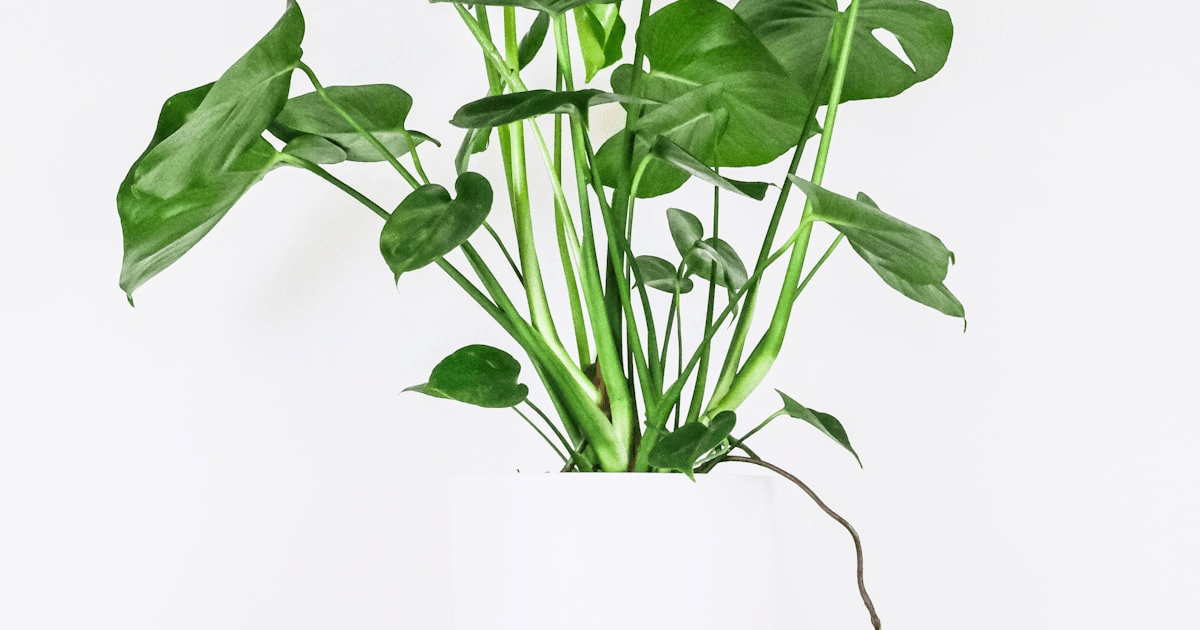
My monstera grew its first aerial root about 18 months after I brought it home. It came out of the stem near the soil line, looked like a thick tan finger, and grew sideways for a couple of inches before I noticed it. By the end of that year there were nine of them, snaking out from different points along the main vine, some thin and green, some thick and woody. I had no idea what to do with them. The internet told me five contradictory things at once.
Here’s what I know now after four years of monstera ownership: aerial roots are not a problem. They’re a feature. They’re one of the clearest signs that your monstera is healthy, mature, and ready to behave like the climbing vine it actually is. The question isn’t “how do I get rid of them,” it’s “how do I work with them so the plant gets bigger and happier.”
This guide walks through what aerial roots actually are, the four things you can do with them (and which one I recommend in most cases), how to use them for propagation, and the rare situations where they might signal a problem. If you’re worried about the weird tendrils on your monstera, the short answer is: don’t be. They’re doing exactly what nature designed them to do.
What Aerial Roots Actually Are
Aerial roots are roots that grow above the soil instead of underground. Monstera puts them out from the nodes along the main stem, which is the same place leaves emerge. They start out small and green, then grow longer and turn tan or brown as they harden into a corky, slightly woody texture.
In the wild, Monstera deliciosa is a climbing plant that grows up tree trunks in Central American rainforests. It uses aerial roots for two specific jobs:
- Anchoring. The roots wedge into bark and hold the plant onto the tree as it climbs upward toward brighter light.
- Absorbing moisture and nutrients. Aerial roots can pull water and dissolved nutrients directly from humid air and from organic matter trapped on tree bark.
When your indoor monstera puts out aerial roots, it’s essentially saying “I am ready to climb something.” It doesn’t know you’re not a tree. It just feels mature enough to start its vertical growth phase, and the aerial roots are the tools it uses for that phase.
This is why aerial roots usually appear on plants that are at least a year or two old and have been growing well. A small juvenile monstera in a 4-inch nursery pot rarely produces them. A mature plant in a 10-inch pot with multiple leaves usually produces lots of them.
Are Aerial Roots Healthy or a Sign of a Problem?
In about 95% of cases, aerial roots are a sign of a healthy plant. They mean the monstera has reached the stage where it’s looking to climb and grow bigger leaves. This is exactly what you want.
The tiny percentage of the time that aerial roots indicate a problem usually involves one of these:
- A plant that’s drowning and producing aerial roots above the soil because the underground roots are damaged from root rot. If the soil is constantly wet, the lower stem feels mushy, and the leaves are also yellowing or drooping, the aerial roots might be a desperate attempt to find air. This is rare but worth checking.
- A severely root-bound plant that has nowhere left to grow underground and is pushing roots out wherever it can. If the pot has roots circling out of every drainage hole and the plant feels loose in the pot, repot it.
For everyone else (the vast majority), aerial roots growing on a plant that otherwise looks fine are great news. Your plant is healthy and mature.
The 4 Things You Can Actually Do With Them
Here are your options, ranked from “most likely to make your plant happy” to “least useful but sometimes necessary.”
1. Train Them Onto a Moss Pole (My Top Recommendation)
This is what aerial roots are made for. A moss pole gives the plant something vertical to climb, and the aerial roots will grab into the moss as the plant grows upward. Once they’re attached, two things happen: the plant becomes more stable, and the new leaves come in noticeably bigger.
Here’s how to set it up:
- Buy or make a moss pole at least 3-4 feet tall. You can buy one for $15-25 at most plant shops. The cheap option is a wooden stake wrapped in damp sphagnum moss and held in place with twine.
- Push the pole into the pot behind the main stem, going as deep as you can without damaging the roots. Use a stable pot that won’t tip over.
- Loosely tie the main stem to the pole using plant ties, soft twine, or velcro plant strips. Don’t tie tightly. You’re guiding, not strangling.
- Mist the pole every few days, or keep it lightly damp with a spray bottle. Aerial roots need moisture to grip into the moss.
- Wait. Within 3-6 weeks the existing aerial roots start curling toward the pole and grabbing in. New leaves on the upward-growing portion will be bigger and more fenestrated.
This is the same setup I describe in our monstera not splitting guide, and it’s the change that makes the biggest difference for getting that classic mature swiss-cheese look. If your monstera has aerial roots and no support pole, this is the move.
2. Tuck Them Into the Soil
If you don’t want a moss pole or your plant doesn’t have one yet, the next best option is to gently bend the aerial roots downward and bury the tips in the soil. Once buried, they convert from aerial roots into regular underground roots within a few weeks, which improves water and nutrient uptake and makes the plant more stable.
How to do it:
- Pick a young, flexible aerial root. Older, woody ones don’t bend well and can snap. Newer green or tan ones are perfect.
- Curve it slowly down toward the soil surface. If it resists, don’t force it. Move on to a different root.
- Bury the tip about 1 inch deep in the soil. You can use a chopstick to make a small hole if needed.
- Pin it in place with a bent paperclip or a small stake until it grips.
- Water normally. The buried portion will start absorbing water within a week or two.
This is a totally fine option, especially for older monstera plants where the aerial roots are sprawling everywhere. It’s also useful if you don’t have space for a moss pole.
3. Leave Them Alone
The default option, and honestly the second-best after a moss pole. Aerial roots growing freely won’t hurt the plant. They might look a little wild, but they’re not damaging anything. If you don’t mind the look, just let them do their thing.
A few things to know if you go this route:
- They don’t need water sprayed on them constantly. Normal indoor humidity is fine.
- They can grow surprisingly long, sometimes 2-3 feet, before they slow down.
- They will eventually go woody and stiff. You can’t reposition a stiff aerial root without breaking it.
- They might brush against walls, furniture, or other plants. Just gently redirect them with your hand if they’re in the way.
The “leave them alone” approach is what experienced collectors usually do. Aerial roots are part of what makes a mature monstera look like a mature monstera. Hiding them or cutting them all off makes the plant look slightly fake.
4. Cut Them Off (Last Resort)
If an aerial root is genuinely in the way (growing into a wall outlet, pushing other plants off a shelf, getting tangled in furniture), you can cut it off. The plant won’t suffer. It’ll just grow new ones somewhere else within a few months.
How to do it:
- Use clean, sharp scissors or shears. Sterilize the blade with rubbing alcohol first.
- Cut as close to the stem as possible without nicking the main stem itself.
- Don’t cut multiple roots at once unless you really need to. One at a time, with a few weeks between cuts, is gentler.
- The cut won’t bleed sap the way some plants do. Monstera handles aerial root removal cleanly.
The plant will not be permanently affected by losing an aerial root. But understand that you’re removing a tool the plant was actively using, and it’ll just have to grow another one. So cutting should be reserved for when an aerial root is causing a real problem, not because it looks weird.
Can You Propagate From an Aerial Root?
This is one of the most-asked questions about aerial roots, and the answer is: not exactly, but kind of.
You cannot propagate from an aerial root by itself. Cutting off just an aerial root and putting it in water or soil will not grow a new plant. Aerial roots don’t have the cellular machinery to regenerate a whole plant the way some other species’ cuttings do.
You can propagate from a stem cutting that includes a node and an aerial root. This is the standard monstera propagation method:
- Find a node on the main vine. This is a slightly raised bump where a leaf and (usually) an aerial root emerge.
- Cut the stem about an inch above and an inch below the node, leaving a section that includes the node, the leaf, and the aerial root.
- Place the cutting in water or moist sphagnum moss with the aerial root submerged or buried.
- New roots will grow from the node within 2-4 weeks. The existing aerial root helps the cutting stay hydrated during this period.
- Once new roots are 2-3 inches long, plant the cutting in soil.
The aerial root is helpful in propagation, but the node is what actually grows into a new plant. Without a node, no new roots, no new growth, no new plant.
If you want a more detailed walkthrough of propagation, our pothos water propagation guide covers the same general principle (with slightly different specifics for pothos), and the same approach works for monstera.
Aerial Roots vs. Underground Roots: Quick Comparison
People sometimes get confused about whether aerial roots are “real” roots or somehow different from the ones underground. They’re real roots, but they’re built for different jobs.
| Feature | Aerial Roots | Underground Roots |
|---|---|---|
| Color | Green when young, tan to brown when mature | White, cream, or light tan |
| Texture | Firm, slightly woody | Soft, flexible |
| Function | Climbing, anchoring, absorbing humidity | Water and nutrient uptake from soil |
| Where they grow | From nodes on the stem, above soil | Below the soil surface |
| Can they convert? | Yes, if buried in soil | No, they stay underground |
| Removable? | Yes, plant tolerates removal | No, plant depends on them |
The interesting thing is that aerial roots can convert into underground roots once buried, but the reverse isn’t true. Underground roots that get exposed to air eventually dry out and die. Aerial roots are uniquely designed to survive in both environments.
When Aerial Roots Are Actually a Problem (Rare)
I want to be honest about the rare cases where lots of aerial roots can signal something off, because if you ignore the signs you can miss a real issue.
Signs that aerial roots may be problem-related:
- The plant is also showing yellow leaves and droopiness
- The lower stem feels soft, mushy, or has dark patches
- The soil stays wet for days after watering
- A sour smell from the soil
- Aerial roots are unusually thick and emerging in clusters very low on the stem, all aimed at trying to escape the pot
- Growth has slowed or stopped despite good light
In these cases, aerial roots aren’t the issue, they’re a symptom of something happening below. Usually the underground roots are damaged from overwatering, and the plant is producing aerial roots as a backup. The fix is to check the root system. Unpot the plant, look at the roots, trim any rot, and repot in fresh well-draining soil. Our root rot rescue guide walks through the process if you need it.
For the broader context of what unhealthy roots look like compared to healthy ones, the same guide has a side-by-side comparison.
What I Actually Did With Mine
I’ll tell you what worked for me, since “do whatever you want” isn’t always helpful advice. After four years of trial and error with my own monstera:
- I added a 4-foot moss pole when the plant had about 6 aerial roots and was sprawling sideways. The roots gripped into the moss within a month.
- I tucked 2 of the lowest aerial roots into the soil, where they converted to underground roots and made the plant more stable.
- I left the rest alone. They snake around the moss pole and the upper portion of the plant looks wild and jungly, which is exactly what I wanted.
- I’ve cut exactly one aerial root in four years, and only because it was growing directly into a wall outlet.
The plant has gone from “small bushy thing in a corner” to “head-height climbing monster with split leaves bigger than my hand.” Aerial roots and a moss pole did most of that.
Quick Decision Guide
If you’re not sure what to do with your monstera’s aerial roots, here’s the short version:
| Situation | Best Action |
|---|---|
| Plant has 1-3 aerial roots, no support pole | Get a moss pole, train roots onto it |
| Plant has many aerial roots, no support pole | Moss pole + tuck a few into the soil |
| Plant is already on a moss pole | Mist the pole, let nature do its thing |
| Aerial root is in the way of furniture or wiring | Cut just that one |
| Plant is also yellowing or droopy | Check roots, suspect overwatering, not aerial roots |
| You like the wild look | Leave them alone, they’re fine |
The Bottom Line
Aerial roots are good news. They mean your monstera is healthy, mature, and asking for something vertical to climb. The single best thing you can do with them is give the plant a moss pole and let nature take its course. New leaves will come in bigger, the plant will be more stable, and within a few months you’ll have the dramatic, sprawling monstera that everyone wants.
If a moss pole isn’t an option, tuck a few aerial roots into the soil. If neither works, just leave them alone. They’re not hurting anything, and cutting them all off is the one thing you should not do unless an individual root is actively causing a problem.
The next time you see a new aerial root push out from your monstera’s stem, treat it as a small celebration. It means the plant trusts you enough to start growing up. Go check on it now. You’ll probably find one or two you hadn’t noticed.
For everything else about keeping a monstera happy, our full monstera care guide covers light, water, soil, and the rest of the basics. According to the Missouri Botanical Garden, monstera’s natural habit as a “vigorous climber” is exactly what aerial roots are designed to support. Working with that habit instead of against it is the key to a thriving plant.
If your monstera is also struggling with yellow leaves, splitting issues, or you’re ready to repot it into a bigger setup, our how to repot houseplants guide walks through the safe way to do it without damaging the existing root system or the aerial roots you’ve worked so hard to encourage.
Frequently Asked Questions
Should I cut off monstera aerial roots?
Can monstera aerial roots grow into the soil?
Why does my monstera have so many aerial roots?
Can you propagate a monstera from an aerial root alone?
Don't miss our guides
Weekly plant care newsletter.